Understanding Iliotibial (IT) Band Syndrome
Iliotibial band syndrome frequently causes pain on the knee’s outer side, impacting athletes and runners; understanding its origins is key to effective management and prevention strategies․
What is the Iliotibial Band?
The iliotibial (IT) band is a robust, thick band of fibrous tissue that extends along the outside of the thigh, originating at the pelvic bone and running down to just below the knee․ It’s not a muscle itself, but rather a strong tendon-like structure composed of fascia – a dense connective tissue․ This band plays a crucial role in stabilizing the knee and hip during movement, particularly during activities like running, cycling, and walking․
Often described as an elastic tissue, the IT band connects muscle to bone, providing essential support; However, it doesn’t stretch significantly․ Problems arise when friction develops between the IT band and the bony prominence on the outer knee (the lateral femoral epicondyle)․ This friction leads to inflammation and the characteristic pain associated with IT band syndrome․ Understanding its anatomy and function is vital for comprehending how and why this syndrome develops․
Anatomy and Function of the IT Band
The IT band’s anatomy is key to understanding its function and potential for issues․ Originating from the tensor fasciae latae (TFL) muscle at the hip, and also receiving fibers from the gluteus maximus and biceps femoris muscles, it descends along the thigh’s lateral side․ It attaches just below the knee, providing lateral knee stabilization․ Its broad, flat structure allows it to resist tension during leg movements․
Functionally, the IT band assists in hip abduction, extension, and external rotation․ More importantly, it controls knee flexion and extension, preventing excessive inward movement․ During running, it helps stabilize the lower leg․ However, its limited elasticity means it doesn’t stretch much, and repetitive bending and straightening can cause friction․ This friction, coupled with biomechanical factors, can lead to inflammation and the pain characteristic of IT band syndrome, highlighting the importance of proper conditioning and flexibility․
Causes of IT Band Syndrome
IT band syndrome arises from overuse, repetitive motions, biomechanical issues like leg discrepancies, and muscle imbalances—weak glutes combined with tight TFL muscles contribute significantly․
Overuse and Repetitive Movements
Overuse and repetitive movements are primary contributors to IT band syndrome, particularly in activities involving consistent bending and straightening of the knee․ Runners and cyclists are especially susceptible due to the cyclical nature of their sports․ Increased training intensity or sudden increases in mileage without adequate preparation can overload the IT band and surrounding tissues․
The IT band itself doesn’t shorten with stretching; the pain stems from friction as it rubs against the lateral femoral epicondyle – the bony prominence on the outside of the knee․ Repeated flexion and extension exacerbate this friction, leading to inflammation and discomfort․ Virtual races and personal best attempts, even with canceled major marathons, can contribute to this overuse as individuals push their limits․
Essentially, the IT band becomes irritated from constant stress, and the body responds with pain․ Recognizing this connection between activity level and symptom onset is crucial for effective prevention and treatment․ Ignoring early warning signs and continuing to push through pain will likely worsen the condition․
Biomechanical Factors: Leg Length Discrepancy & Foot Pronation
Biomechanical factors significantly influence the development of IT band syndrome․ A leg length discrepancy, even a subtle one, can cause the pelvis to tilt, increasing stress on the IT band․ The body compensates for this imbalance, altering running or cycling mechanics and placing uneven load on the lateral knee․
Foot pronation – the inward rolling of the foot – is another key contributor․ Excessive pronation can internally rotate the tibia (shin bone), further stressing the IT band․ This altered biomechanics increases friction against the femoral epicondyle, leading to inflammation and pain․ Appropriate footwear designed to control pronation can help mitigate this effect․
These biomechanical issues often work in conjunction with muscle imbalances (addressed elsewhere) to create a perfect storm for IT band syndrome․ Addressing these underlying factors, through orthotics or gait retraining, is often essential for long-term relief and preventing recurrence․
Muscle Imbalances: Weak Glutes & Tight Tensor Fascia Latae (TFL)
Muscle imbalances are central to the development of IT band syndrome․ Weak gluteal muscles (gluteus maximus and medius) fail to adequately stabilize the pelvis during movement․ This instability forces the tensor fascia latae (TFL) – a muscle closely connected to the IT band – to overcompensate, becoming overworked and tight․
A tight TFL pulls on the IT band, increasing its tension and friction as it passes over the lateral femoral epicondyle․ This constant friction leads to inflammation and the characteristic pain of IT band syndrome․ Strengthening the glutes helps restore proper pelvic control, reducing the strain on the TFL and IT band․
Addressing both weaknesses and tightness is crucial․ A comprehensive rehabilitation program should include glute strengthening exercises alongside TFL stretching and myofascial release techniques to restore optimal muscle function and biomechanics․
Symptoms of IT Band Syndrome
IT band syndrome typically presents as pain on the outer knee and thigh, often sharp or burning, triggered by activities like running and stair climbing․
Pain Location: Outer Knee & Thigh
The hallmark of IT band syndrome is pain localized along the outer aspect of the knee․ This discomfort frequently radiates up the thigh, sometimes extending as far as the hip․ Individuals often describe the pain as being concentrated just above the knee joint, at the point where the iliotibial band rubs against the lateral femoral epicondyle – the bony prominence on the outside of the knee․
Initially, the pain may be subtle and only noticeable after prolonged activity, such as a long run or cycling session․ However, as the condition progresses, the pain can become more persistent and occur even during everyday activities like walking or going up and down stairs․ Some individuals experience a snapping sensation in the knee during movement, although this isn’t always present․ The precise location of the pain can vary slightly from person to person, but it consistently centers around the outer knee and thigh region․
It’s important to note that pain stemming from other knee issues can sometimes mimic IT band syndrome, so accurate diagnosis is crucial․
Pain Characteristics: Sharp, Burning, or Aching
The nature of pain associated with IT band syndrome can vary significantly between individuals and even change over the course of the condition․ Initially, the pain is often described as a dull, aching sensation that develops gradually during activity․ As the syndrome progresses, the pain can become sharper and more intense, particularly during weight-bearing exercises․
Many sufferers report a burning sensation along the outer knee, especially during or immediately after running or cycling․ This burning is often linked to the friction between the IT band and the femoral epicondyle․ Some individuals experience a stabbing pain with each knee bend, while others describe a deep, persistent ache that lingers even at rest․
The pain’s intensity is typically activity-dependent, worsening with increased exertion and easing with rest․ However, in severe cases, the pain can become constant and debilitating, significantly impacting daily life and athletic performance․
Pain Triggers: Running, Cycling, Stairs
Specific activities consistently provoke pain in individuals with IT band syndrome․ Running is a common trigger, as the repetitive knee flexion and extension exacerbate friction between the IT band and the lateral femoral epicondyle․ The pain often appears mid-run, increasing with distance and intensity․
Cycling, particularly uphill or with high resistance, also frequently elicits symptoms․ The sustained knee bend and forceful muscle contractions contribute to IT band irritation․ Descending stairs can be particularly painful, as the eccentric load on the knee increases stress on the band․
Even walking, especially on inclined surfaces or for extended periods, can trigger discomfort․ Any activity involving repetitive knee bending or prolonged weight-bearing on the affected leg is likely to worsen symptoms․ Recognizing these triggers is crucial for managing the condition and modifying activity levels to prevent further aggravation․
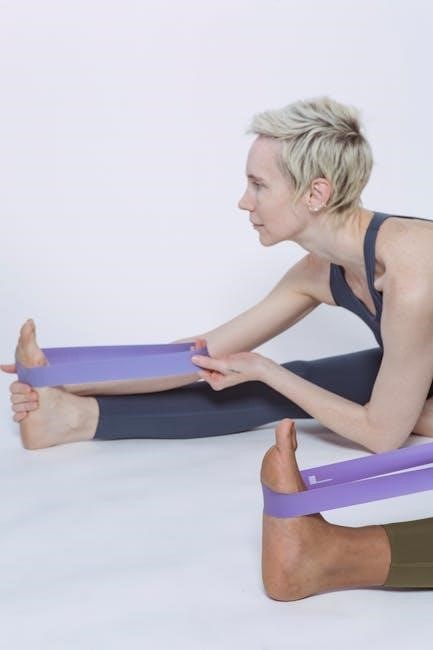
IT Band Syndrome Stretches & Exercises
Effective management involves targeted stretches and exercises to improve flexibility, strengthen supporting muscles, and reduce IT band tension, aiding in pain relief and recovery․
Foam Rolling the IT Band
Foam rolling is a self-myofascial release technique crucial for addressing IT band tightness․ Begin by lying on your side with the foam roller positioned under your outer thigh, supporting your weight with your forearm and top leg․ Slowly roll from just above the knee to the hip, pausing on tender spots for 20-30 seconds․
This process helps break up adhesions and improve blood flow to the IT band and surrounding tissues․ It’s important to maintain controlled movements and avoid rolling directly over the knee joint․ While it may be uncomfortable, the pressure should be tolerable․ Consistent foam rolling, several times a week, can significantly reduce IT band tension and alleviate pain․
Remember to breathe deeply during the exercise and focus on relaxing the muscles․ Combining foam rolling with stretching exercises will yield even better results․ Consider using a textured foam roller for a deeper massage, but start with a smoother one if you’re new to this technique․
Static Stretches for the IT Band
Static stretching plays a vital role in lengthening the IT band and improving flexibility․ A common stretch involves standing with the affected leg crossed behind the other, then leaning to the side opposite the stretched leg until you feel a stretch along the outer thigh․ Hold this position for 30 seconds, repeating 2-3 times․
Another effective stretch is the standing IT band stretch, where you reach one arm overhead and bend towards the opposite side, keeping your feet planted․ Again, hold for 30 seconds․ These stretches target the tensor fasciae latae (TFL), a muscle closely connected to the IT band․
Remember to perform these stretches gently and avoid bouncing, which can cause injury․ Static stretches are best performed after a warm-up or after activity when muscles are more pliable․ Consistency is key; incorporate these stretches into your routine several times a week to maintain flexibility and reduce IT band syndrome symptoms․
Dynamic Stretches for the IT Band
Dynamic stretching prepares the IT band and surrounding muscles for activity, improving range of motion and reducing injury risk․ A beneficial dynamic stretch is the leg swing – gently swing one leg forward and backward, then side to side, controlling the movement and increasing the range gradually․ Perform 10-15 repetitions on each leg․
Another effective exercise is the lateral lunge․ Step to the side with one leg, bending that knee while keeping the other leg straight․ This targets the hip abductors and TFL, crucial for IT band health․ Repeat 10-15 times per side․
These movements should be controlled and fluid, not held for extended periods like static stretches․ Dynamic stretches are best performed before exercise as part of a warm-up routine․ They enhance blood flow and muscle elasticity, preparing the body for the demands of activity and helping to prevent IT band irritation․
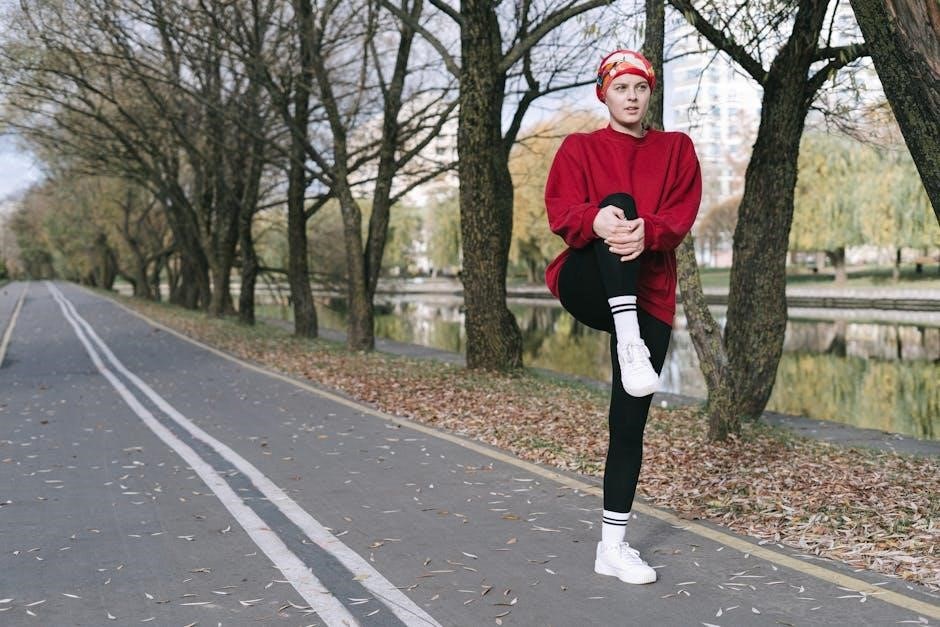
Strengthening Exercises for IT Band Syndrome
Strengthening gluteal muscles and hip abductors is vital for stabilizing the pelvis and reducing stress on the IT band, aiding recovery and preventing recurrence․

Glute Strengthening Exercises
Strong gluteal muscles are fundamental in addressing IT band syndrome, as they contribute significantly to pelvic and lower limb stability․ Weak glutes often lead to altered biomechanics, increasing stress on the IT band․ Several exercises effectively target these crucial muscles․
Glute Bridges are an excellent starting point․ Lie on your back with knees bent and feet flat, then lift your hips off the ground, squeezing your glutes at the top․ Clamshells, performed lying on your side with knees bent, involve opening and closing your knees while keeping your feet together, engaging the gluteus medius․
Single-Leg Deadlifts challenge balance and strengthen the glutes and hamstrings simultaneously․ Holding a light weight can increase the intensity․ Hip Thrusts, similar to glute bridges but with your upper back elevated on a bench, allow for a greater range of motion and increased glute activation․ Consistent incorporation of these exercises into a routine can dramatically improve glute strength and alleviate IT band syndrome symptoms․
Hip Abductor Strengthening Exercises
Strengthening the hip abductor muscles – primarily the gluteus medius and minimus – is crucial for stabilizing the pelvis during single-leg activities like running and walking․ Weak hip abductors contribute to excessive inward motion of the knee (pronation), exacerbating IT band stress․
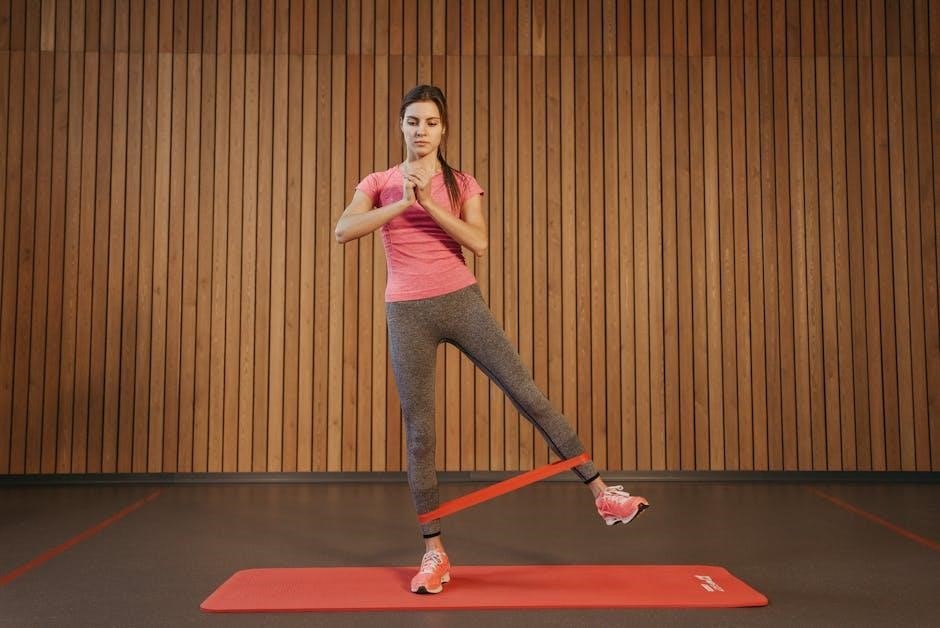
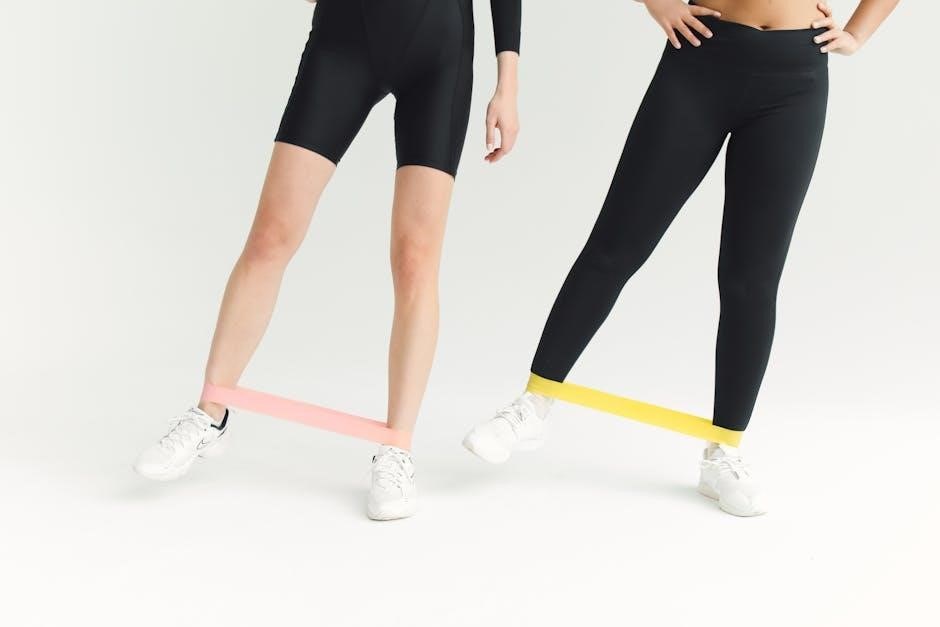
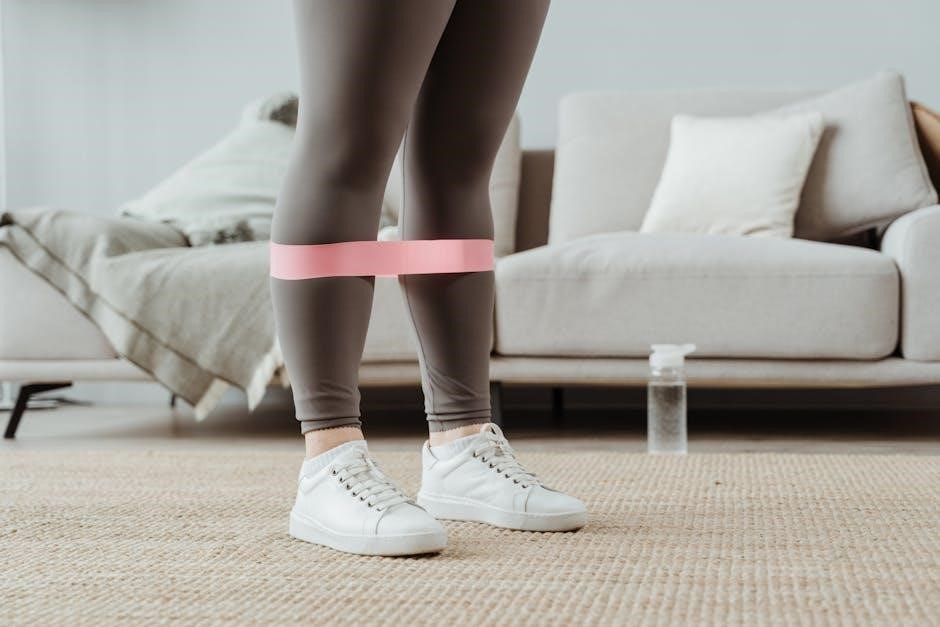
Side Leg Raises are a foundational exercise․ Lying on your side, lift your top leg straight up, keeping your core engaged and avoiding rotation․ Banded Walks, using a resistance band around your ankles or thighs, involve taking small steps sideways, maintaining tension on the band․ This directly targets the gluteus medius․
Standing Hip Abduction, performed while holding onto a stable surface, involves lifting your leg out to the side against resistance․ Clamshells (also beneficial for glutes) work the hip abductors isometrically․ Regularly performing these exercises helps restore proper hip mechanics, reducing strain on the IT band and promoting a more efficient, pain-free gait․
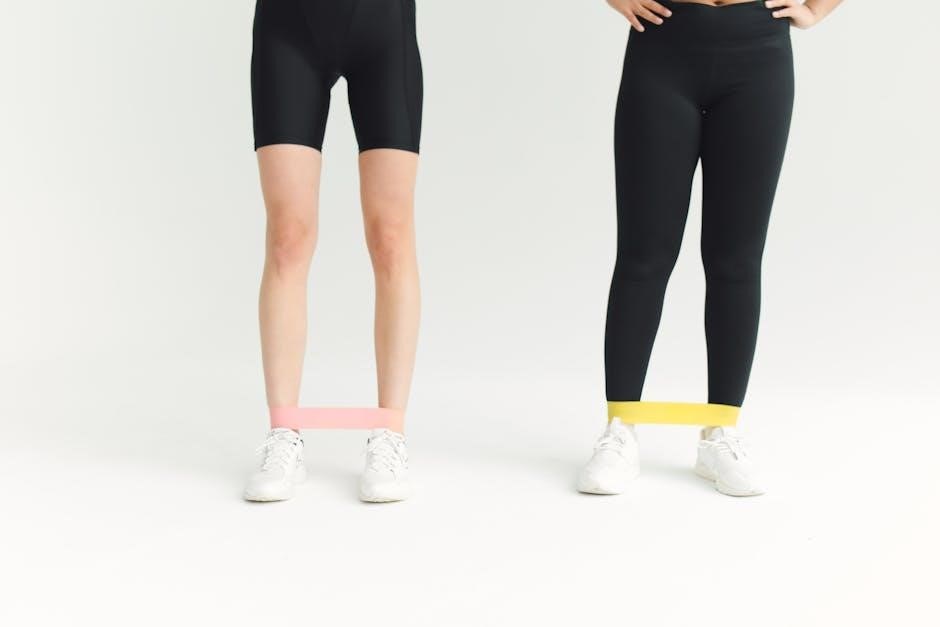
Preventing IT Band Syndrome
Proactive measures, including consistent warm-ups, gradual training increases, and appropriate footwear, are vital for minimizing IT band stress and preventing painful syndrome development․
Proper Warm-up and Cool-down
A comprehensive warm-up is crucial before any physical activity to prepare the muscles and connective tissues, including the IT band, for exertion․ Dynamic stretches, such as leg swings and torso twists, increase blood flow and flexibility, reducing the risk of injury․ Prioritize movements that mimic the activity you’re about to perform, gradually increasing intensity․
Equally important is a cool-down routine post-exercise․ Static stretches, holding each stretch for 20-30 seconds, help to lengthen the IT band and surrounding muscles, improving flexibility and reducing muscle soreness․ Focus on stretches targeting the glutes, hamstrings, and quadriceps, as these muscle groups directly influence IT band function․
Neglecting either warm-up or cool-down can contribute to muscle imbalances and increased tension in the IT band, predisposing you to IT band syndrome․ Consistent implementation of these routines is a cornerstone of preventative care, supporting optimal biomechanics and minimizing the likelihood of developing pain․
Gradual Increase in Training Intensity
Sudden increases in training volume or intensity are a primary contributor to IT band syndrome․ The IT band and surrounding muscles need time to adapt to increased stress; overloading them too quickly can lead to inflammation and pain․ Implement the “10% rule,” increasing your mileage or intensity by no more than 10% per week․
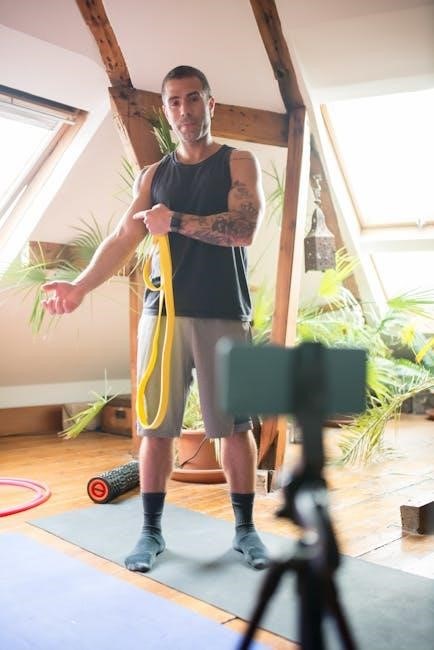
Listen to your body and pay attention to any early warning signs of discomfort․ Ignoring pain and pushing through it can exacerbate the problem, leading to a more severe and prolonged injury․ Rest and recovery are just as important as training itself․ Incorporate rest days into your schedule to allow your body to repair and rebuild․
Vary your training routine to avoid repetitive stress on the IT band․ Cross-training activities, such as swimming or cycling, can help maintain fitness while reducing the impact on your knees․ A well-structured training plan that prioritizes gradual progression and adequate recovery is essential for preventing IT band syndrome․
Appropriate Footwear
Proper footwear plays a crucial role in preventing IT band syndrome, particularly for runners and walkers․ Shoes that provide adequate cushioning and support can help absorb impact and reduce stress on the lower limbs․ Consider getting a professional gait analysis to determine your foot type and biomechanics․
Neutral shoes are often recommended for individuals with IT band syndrome, as they allow the foot to move naturally without excessive pronation or supination․ However, the best shoe for you will depend on your individual needs and preferences․ Replace your running shoes every 300-500 miles, or when the cushioning begins to wear down․
Avoid shoes that are worn out or ill-fitting, as these can contribute to biomechanical imbalances and increase your risk of injury․ Orthotics, or shoe inserts, may be helpful for individuals with foot pronation issues․ Consulting with a podiatrist or physical therapist can help you choose the right footwear and orthotics for your specific condition․